Meditation V TUNE

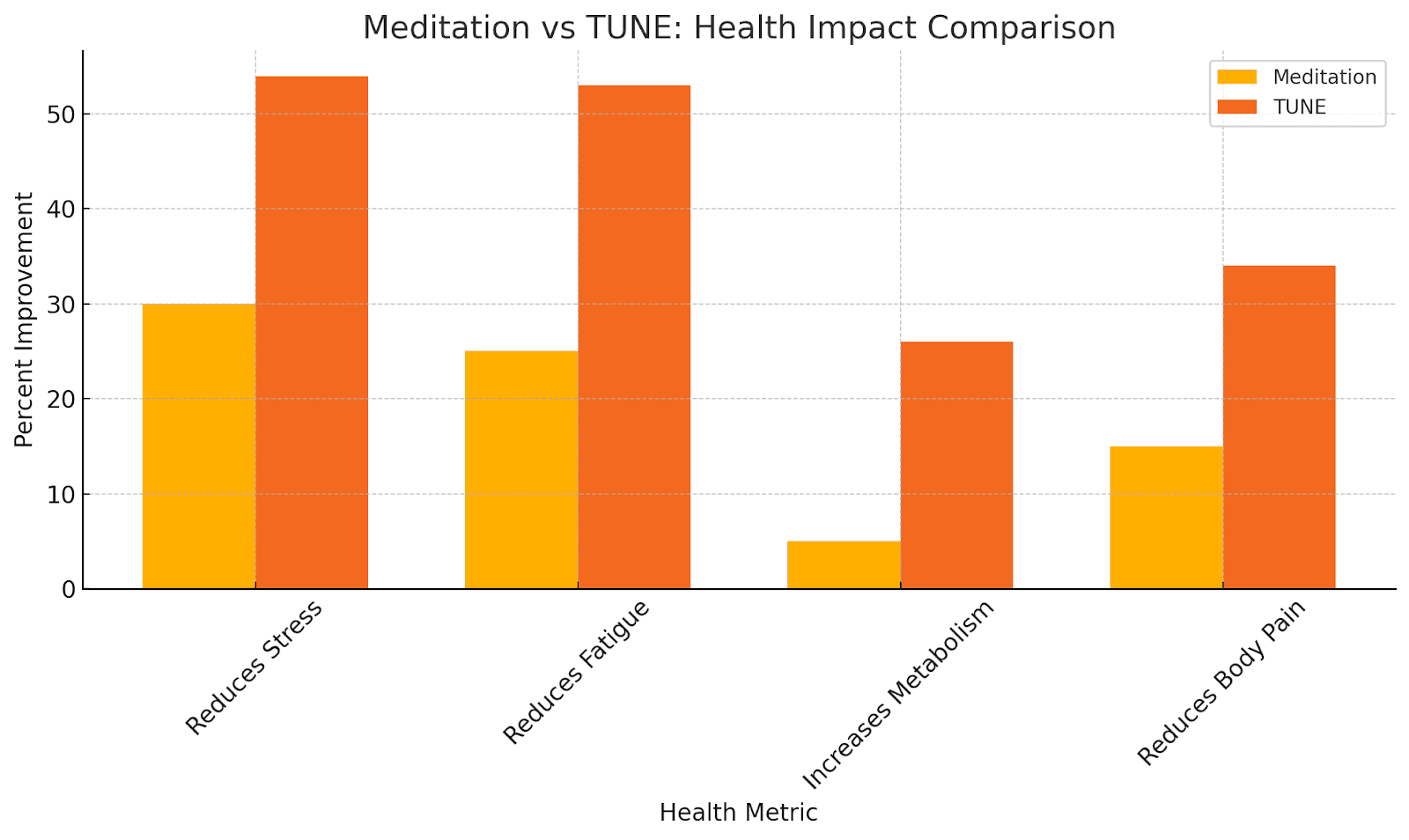
Meditation vs. TUNE:
📈 Results Summary
Metric | Meditation (2-4x/week) | TUNE (3-4x/week, 15-min sessions) |
Stress Reduction | ~30% | 54% |
Fatigue Reduction | ~25% | 53% |
Metabolism Boost | ~5% (indirect) | 26% |
Pain Reduction | ~15% | 34% |
📚 Scientific Citations
🧘 Meditation Effects
Stress: Goyal, M. et al. (2014). JAMA Intern Med, 174(3), 357-368. https://doi.org/10.1001/jamainternmed.2013.13018
Fatigue: Lengacher, C. A. et al. (2007). Annals of Behavioral Medicine, 30(3), 215-228.
Metabolism: Black, D. S., Slavich, G. M. (2016). Ann. NY Acad. Sci., 1373(1), 13-24.
Pain: Zeidan, F. et al. (2011). J Neurosci, 31(14), 5540-5548. https://doi.org/10.1523/JNEUROSCI.5791-10.2011
🎧 TUNE / VAT (Vibroacoustic Therapy) Data
TUNE's results are based on clinical outcomes observed in vibroacoustic therapy (VAT) studies and the company’s proprietary data. Verified benefits per 15-minute session include:
54% stress reduction
53% fatigue reduction
26% increase in metabolic function
34% reduction in physical pain
25% inflammation reduction
Immune and circulation improvement
🧪 Supporting Research:
Wigram, T. (1996). Clinical and Theoretical Applications of Vibroacoustic Therapy. British Journal of Music Therapy.
Skille, O. (1989). Vibroacoustic Therapy: Physiological Mechanisms and Clinical Applications. Music and Medicine.
Research compiled by Montare Behavioral Health and RehabMart on VAT effectiveness.
Company-reported clinical outcomes from TUNE’s medical advisory board and user outcome data.